


Fault Line Report · Monday, Nov 2, 2026
The S&P 500 closed Monday at 752.10, down 0.5% from Friday’s 755.72. That puts it 3.5% below its peak. The market didn’t break, but the stress is building underneath.
The scores
Crack 2.0. Fragility 1.5. Leading 1.5.
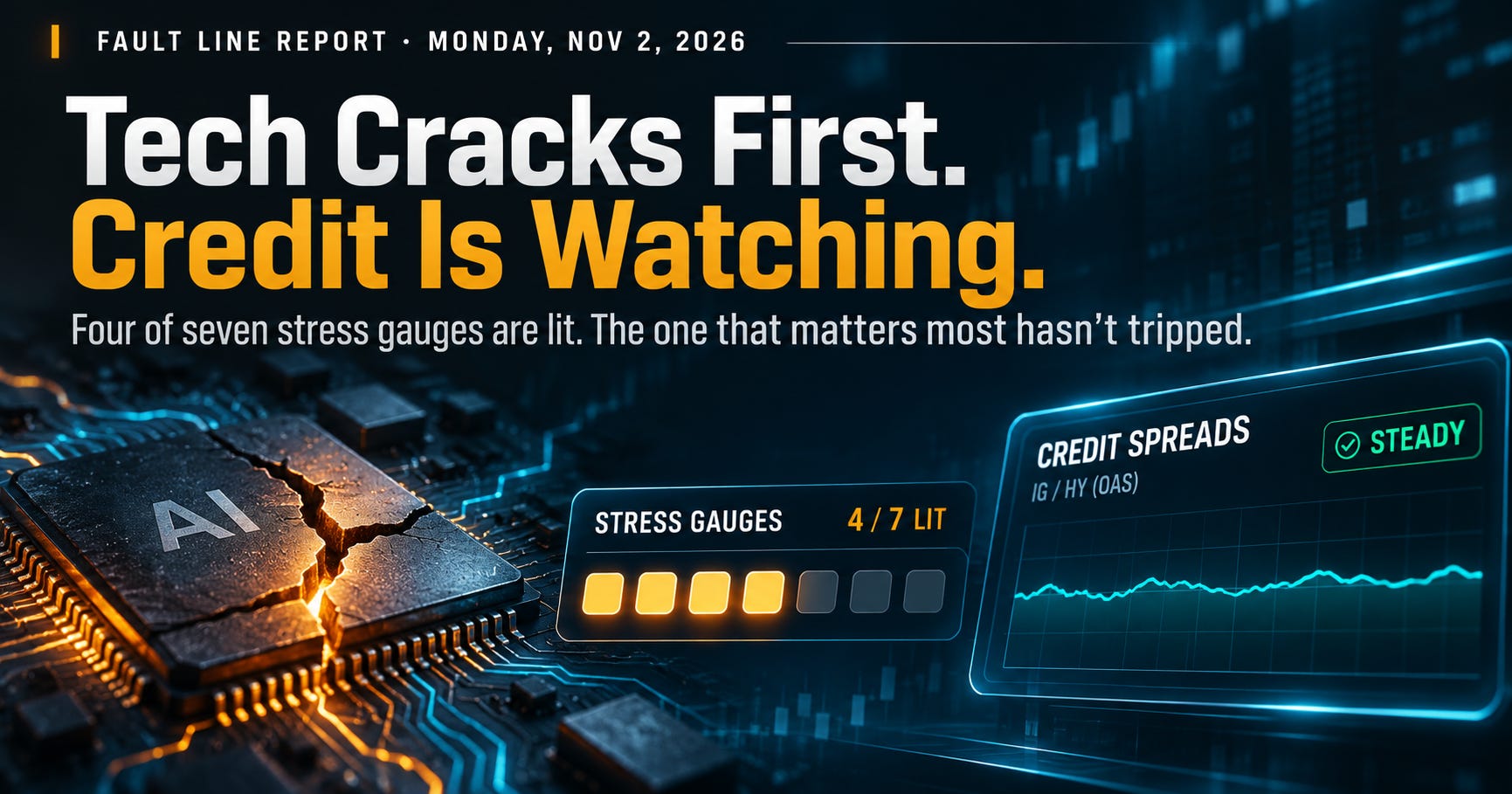
My separate seven-family stress sensor now has four families active: rates, inflation, breadth and the macro-leading group. Credit, labor and volatility are still clear.
Rates are the pressure.
The 30-year Treasury yield is 5.31%, above the 5.25% line I watch. The 10-year is at 4.94%. When long rates stay this high, they weigh on anything priced on future earnings, which means tech first.
Oil is adding to it.
WTI closed at $96.26 and Brent at $104.23. Both are above the $90 level where my inflation signal turns on. Higher oil keeps inflation sticky, which keeps the Fed and long rates from easing.
Tech is where it shows.
Momentum is fading, and the S&P’s 14-day RSI is 38.1. That’s soft but nowhere near oversold, so the selling has room to run if it keeps going.
Credit hasn’t broken, but it’s moving.
High-yield spreads are at 344 basis points. That’s still low in historical terms, but they’ve widened two sessions in a row. My signal needs five in a row before it counts. This is the line between an ordinary pullback and something more serious, so it’s the first thing I’m watching.
Volatility is nervous, not panicked.
The VIX is at 21.15. It hasn’t closed above 22 on any of the last 30 days, which is the level I need to see held before calling it real fear.
What’s coming
Nov 3: US midterm elections.
Nov 6: jobs report (consensus around 55,000).
Nov 10: CPI inflation.
Dec 8–9: Fed meeting.
What would change my read
Spreads widening for five straight sessions, or the VIX holding above 22. Either would move this from stress to confirmation. Until then, it’s pressure without a break.
Fault Line Report is research and commentary, not investment advice. The framework is a context tool. It has not been shown to time markets.